
Contact Us
To provide feedback on the Community Policing Dispatch, e-mail the editorial board at [email protected].
To obtain details on COPS Office programs, publications, and resources, contact the COPS Office Response Center at 800-421-6770 or [email protected]

U.S. Department of Justice
Office of Community Oriented Policing Services
Washington, DC 20530

Spokane Police Department: Costumes, Candy, and Community
January 2026 | Volume 19 | Issue 1
The COPS Office is pleased to feature the Spokane (Washington) Police Department as a winner of the 2025 Community Policing in Action Photo Contest.
A Community Tradition
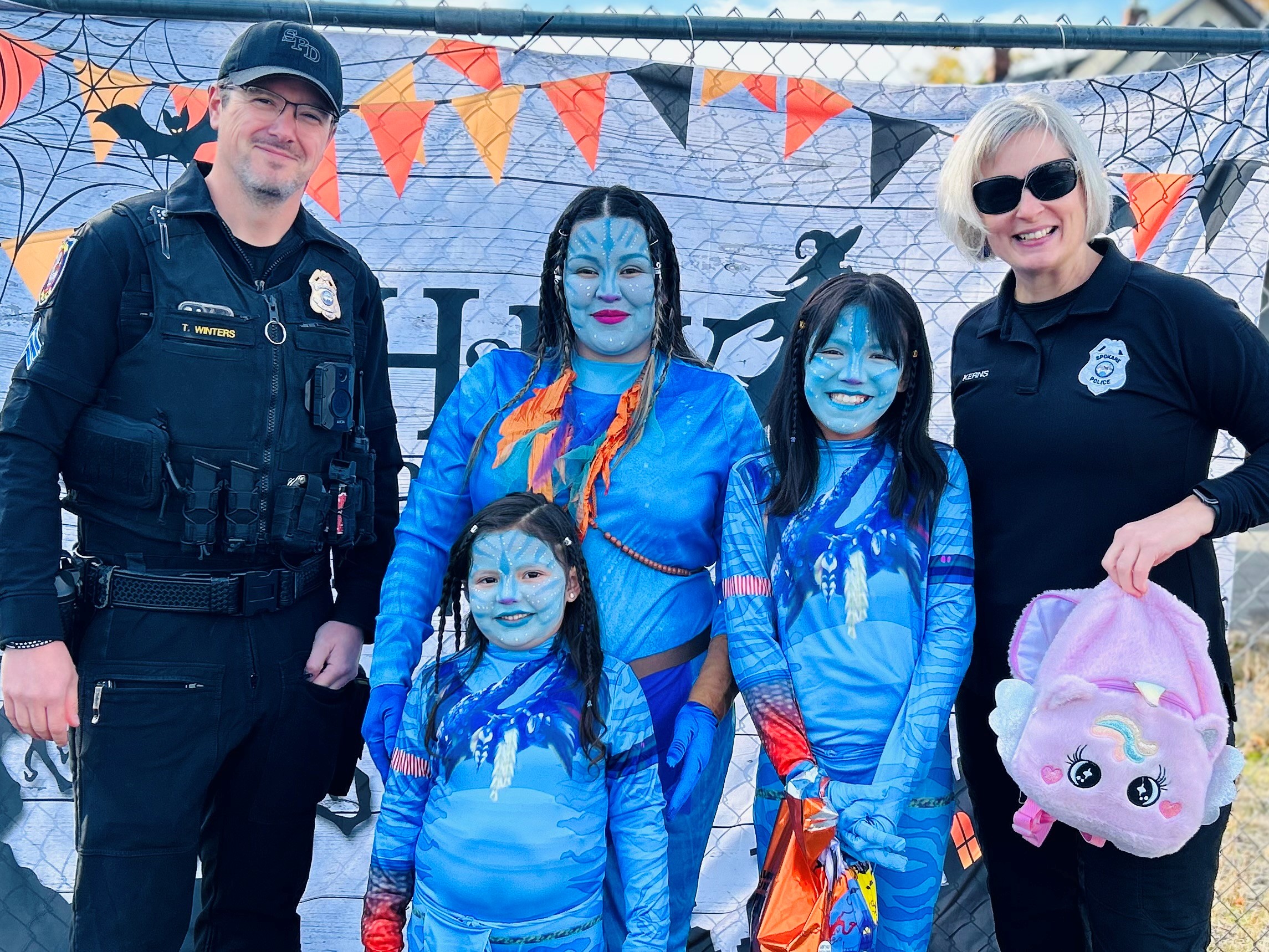
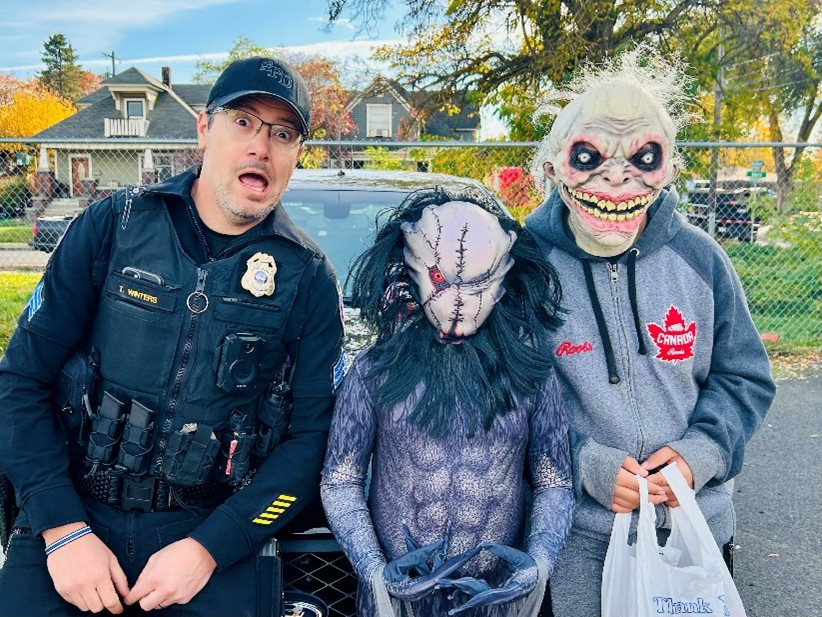 In Spokane, the second largest city in Washington, candy and costumes abound at the American Indian Community Center’s (AICC) annual Trunk or Treat celebration. The Spokane Police Department (SPD), with more than 330 sworn officers, has a long tradition of community-oriented policing strategies, and Trunk or Treat is one of the department’s favorite ways to meet local families.
The AICC has been a Spokane fixture for more than 50 years, offering cultural programs, social services, employment assistance, and behavioral health support. Spokane is home to one of the largest urban Native American populations in the United States, representing more than 300 tribes. Building strong relationships with the AICC and similar organizations is central to SPD’s philosophy of community policing.
Making Positive Memories
“It’s meaningful for us to be invited and to be invited again,” said Kathy Armstrong, a representative of SPD. Participating in Trunk or Treat is “a really special experience,” she added, with “some of the most amazing costumes I’ve ever seen”—not to mention plenty of candy.
“Kids are happy, we’re telling them how much we enjoy their costumes. We’re giving them candy, high fives, sometimes hugs. Everyone is in such a safe and happy space, making good memories with police.”
For Armstrong and her colleagues, these positive moments are central to the department’s vision of community policing. “Police need to be visible in the community, and people need opportunities to interact with officers when there’s not a crisis or crime occurring,” she explained. “We’re trying to make every interaction a positive interaction that builds public trust.”
“When the community feels that the police department is working with them, they're more likely to cooperate and support the police department's efforts to fight crime.”
Partnerships That Matter
The SPD’s relationship with the AICC extends beyond Halloween. The SPD has worked with the AICC on a range of initiatives, from supporting youth and family programs to distributing books and school supplies through grants from the Ella Fitzgerald Charitable Foundation.
Armstrong emphasized that these efforts are not only about resources but also about building trust and communication long before a crisis arises. “There’s good networking that comes out of having a relationship with service providers.” For example, representatives from the AICC have called Armstrong and the SPD about endangered and missing indigenous persons.
Spokane is fortunate to have both engaged residents and strong partnerships across the city, Armstrong noted. “It’s a wonderful community to work for the police department or be an officer in because it’s very collaborative. There are always amazing things happening in Spokane, with different agencies working together.”
Addressing Challenges Together
Like many U.S. cities, Spokane faces challenges such as violent crime, homelessness, and substance use. But the SPD knows these cannot be solved through enforcement alone. “We cannot arrest our way out of these problems. So, it takes a team approach,” Armstrong said.
That’s why the SPD invests in both enforcement and prevention, using evidence-based approaches such as place-based policing, person-focused enforcement, and crime harm indexes, while also partnering with behavioral health providers, service agencies, and neighborhood councils.
Beyond Trunk or Treat
 Community outreach remains a top priority for SPD throughout the year. With the help of volunteers, reserve officers, and community partners, the department organizes and participates in programs such as the Police Activities League, Special Olympics partnerships, and many others. Through the Spokane Police Foundation, the department has been able to win grants and implement innovative programs like bike swaps that help remove weapons from the community.
Previously, the SPD also engaged with the COPS Office through the Collaborative Reform Initiative for Technical Assistance (CRI-TA) process, achieving significant and permanent improvements by 2018. The SPD went above and beyond U.S. Department of Justice suggestions in many instances—specifically in the areas of community outreach, training, and policy review.
“Community outreach is a priority to Spokane Police Department, and our community outreach is all about cooperation and partnerships,” Armstrong said.
Photos courtesy of the Spokane (Washington) Police Department.
Subscribe to Email Updates
To sign up for monthly updates or to access your subscriber preferences, please enter your email address in the Subscribe box.


Explore
Connect With Us
Want to stay connected with the COPS office?
Follow us on social media!


